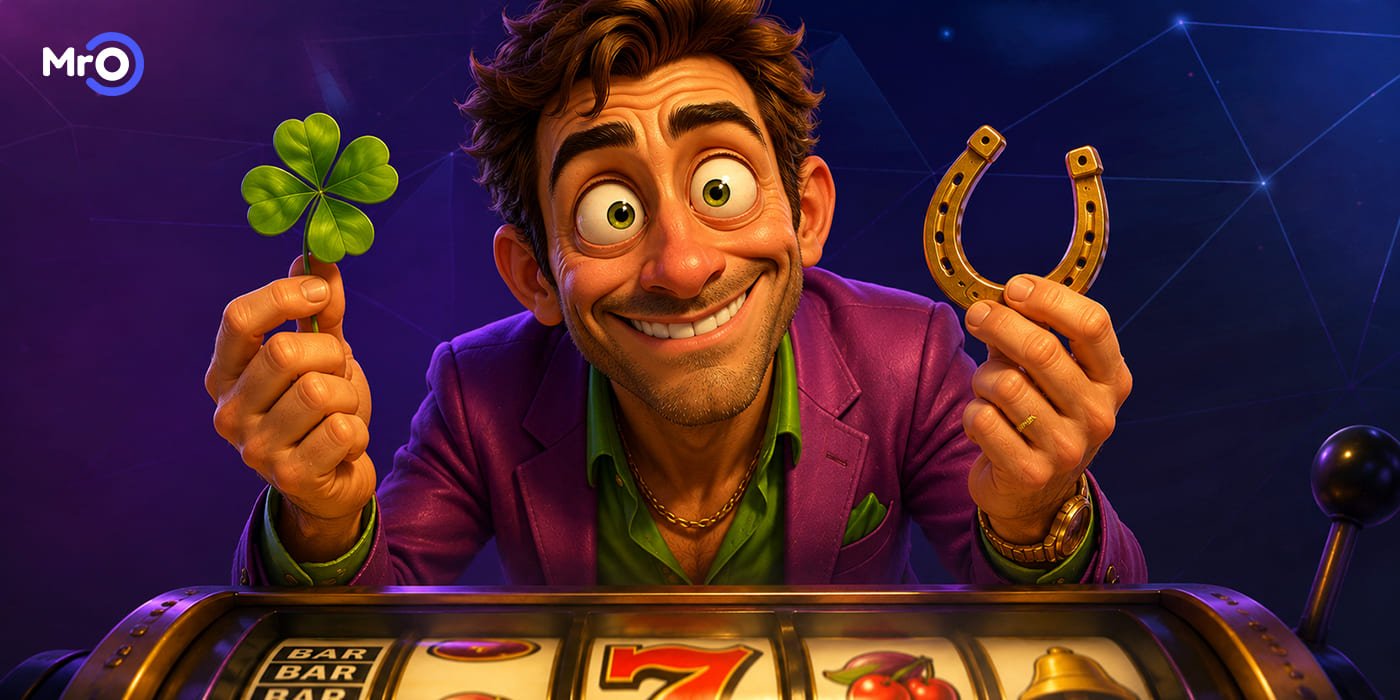
Think You’re Due a Win? The Dangerous Gambler’s Fallacy
The gambler’s fallacy can turn a simple losing streak into a very convincing story.
First, a few rounds end badly. Then, another loss appears. Suddenly, one thought starts to feel obvious: “A win must be coming soon.” It sounds fair. After all, how many times can the same thing happen?
Unfortunately, random games do not care about what feels fair. They do not remember previous results. Also, they never decide that one player has waited long enough.
Personally, I understand why the idea feels believable. The brain wants every story to have a turning point. However, casino games do not follow scripts, and the next round has not read the previous chapter. So, let’s look at why a win is never due and how this belief can affect real decisions.
What Is the Gambler’s Fallacy?
The gambler’s fallacy is the mistaken belief that previous random results make a different outcome more likely.
For example, imagine that a roulette wheel lands on red six times. Many people will expect black next. Since red appeared so often, black now seems overdue. However, the wheel has no memory. If each spin is independent, the earlier results cannot push the next one toward black.
The same mistake appears in slots. A player may wait through many spins without seeing a bonus round. As a result, the feature begins to feel closer. Still, waiting does not create progress. Unless the game clearly includes a collection feature or another saved mechanic, every new spin starts fresh.
Why the Gambler’s Fallacy Feels Logical
People naturally search for patterns. Usually, that skill helps us understand the world.
We notice that dark clouds often bring rain. Likewise, we learn that touching a hot pan is a terrible hobby. In those situations, the past can provide useful information.
Random games work differently. A short sequence may contain repeats, streaks, or unusual clusters. Yet, those patterns can appear without predicting anything. The brain also expects small groups of results to look balanced. Therefore, five heads in a row may seem wrong, while a mix of heads and tails looks more random. In reality, both sequences are possible. Randomness does not need to look tidy. If every result alternated perfectly, the pattern would be predictable. That would not be very random at all.
The Next Result Does Not Know the Last One
Think about a fair coin. Suppose it lands on heads five times in a row. Tails may now feel like the natural next result. However, the sixth toss begins with the same probabilities as the first one. The coin does not become tired of heads. It also does not feel responsible for creating variety.
Over thousands of tosses, the total results may move closer to an even split. Still, this long-term balance does not tell us what must happen on the next toss. That difference causes much of the confusion behind the gambler’s fallacy.
Long-term probability describes what may happen across many events. It does not provide a schedule for individual results.
How the Gambler’s Fallacy Appears in Slots
Slot players may not say the words “gambler’s fallacy.” Instead, the belief usually appears through familiar thoughts:
- The bonus has to land soon.
- This slot has been cold for too long.
- I have already waited through the bad part.
- One more spin could turn everything around.
- Stopping now would waste the previous spins.
Each thought connects a future result with events that have already finished. However, a slot does not know that a bonus symbol almost landed. It does not track one player’s disappointment or prepare a reward for patience.
Slots use random number generator technology to produce results. Therefore, every spin creates a new combination according to the rules of the game.
Read the Mr O Casino guide to random number generators to learn more about how random slot outcomes work.
Near Misses Do Not Create Progress
Near misses can make the gambler’s fallacy feel even stronger. Imagine that two bonus symbols land. Then, the third symbol passes just above the required position. The feature looked incredibly close. Emotionally, the player may feel that the game is building toward something.
Yet, the round has ended. A near miss is still a losing result. Unless an explained game mechanic saves progress between spins, the next round does not begin closer to the bonus. Personally, I compare this feeling to missing a bus by ten seconds. You were close, and it is definitely annoying. Still, that does not mean the next bus will arrive ten seconds earlier as an apology.
Gambler’s Fallacy at the Roulette Table
Roulette offers one of the clearest examples of this myth. Suppose red appears eight times in a row. At that point, black can start to look almost irresistible. Some players may increase their stake because they believe the streak must end. However, nothing about the wheel has changed. The black numbers have not multiplied. Meanwhile, the red numbers have not disappeared.
Also, roulette wheels include zero pockets. Therefore, red and black are not exact 50/50 bets. The red streak may have been unusual before it happened. Once it has already occurred, though, it cannot change the probability of the next independent spin. Black may appear next. Red may appear again. Neither outcome is owed.
A Game Does Not Keep Your Personal History
Losses can start to feel personal during a difficult session.
After enough poor results, a game may seem stubborn or deliberately unhelpful. Some players may even feel that it needs to give something back. However, casino games do not form opinions about individual players.
A slot does not know how much you spent earlier. Likewise, a roulette wheel does not know which color you selected. The next outcome cannot serve as compensation because the game does not keep an emotional record of the past. This fact can feel disappointing. Still, it also removes the need to remain and wait for a game to correct itself. There is nothing to correct. A random sequence can look unbalanced and still be random.
RTP Does Not Promise a Personal Return
Return to Player, or RTP, can create another version of the gambler’s fallacy.
RTP represents a theoretical average across a very large number of game rounds. It does not promise that one player will receive a certain amount back during one session.
For instance, a slot with 96% RTP does not guarantee a return of $96 after someone wagers $100. One session may finish above the theoretical percentage. Another may end far below it. Therefore, RTP should not be treated like a personal refund schedule. The game does not monitor your balance and prepare a win when your results move below its long-term average.
Volatility can also change the rhythm of a slot. Low-volatility games may offer smaller wins more often. In contrast, high-volatility games may create longer waits between wins. Even so, volatility cannot reveal when the next win will happen. Learn more in this guide to slot volatility and game rhythm.
Previous Spending Cannot Protect the Next Bet
The gambler’s fallacy often appears beside another thinking error called the sunk cost effect.
A sunk cost is money or time that has already been spent. It cannot be recovered by pretending it still belongs to the current decision. For example, a player may think, “I have already spent this much, so I cannot stop now.” However, continuing does not protect the earlier spending. It only creates another chance to lose more.
The next wager should be judged on its own. Does it fit the original budget? Is the session still entertaining? Has the planned time limit already passed? If the only reason to continue is recovering the past, the decision is no longer fresh.
Why “Due a Win” Can Lead to Chasing Losses
Chasing losses means continuing to gamble because you want to recover money already lost.
The gambler’s fallacy can make this choice feel reasonable. After all, if a win seems close, stopping may look like leaving at the worst possible moment. Yet, there is no proof that a win is close.
A common pattern may look like this:
- The player sets a spending limit.
- Several losses happen quickly.
- A different result starts to feel overdue.
- The original budget no longer seems sufficient.
- More funds are added to catch the expected win.
- Another loss creates even more pressure.
At that point, the session is no longer about entertainment. Instead, it has become a recovery mission. Unfortunately, one uncertain result cannot promise recovery.
The Hot-Hand Belief Makes the Opposite Prediction
Not everyone expects a streak to end. Some players believe it will continue.
After several wins, a slot may appear hot. Therefore, the player may raise the stake and expect another favorable result. This idea is often called the hot-hand belief. Although it sounds different from the gambler’s fallacy, both mistakes use the past to predict an independent future result.
One person sees several losses and expects a win. Another sees several wins and expects more success. Neither belief changes the game’s actual probabilities. A previous win does not make the next wager safer. It only tells you how the last round ended.
How to Recognize Gambler’s Fallacy Thinking
The belief can appear in several forms:
- I cannot lose again.
- The game must turn around.
- Black has been missing for too long.
- The feature is getting closer.
- I deserve at least one win.
- Stopping now would waste the whole session.
- Another round should fix this.
When one of these thoughts appears, ask one question: What has actually changed about the next result?
If the only new information is a series of past outcomes, the probability may not have changed at all. This question does not predict what will happen. However, it can separate a strong feeling from a real fact.
Try the Fresh-Decision Test
The fresh-decision test offers another way to challenge the gambler’s fallacy. Imagine that you have just opened the game. There were no earlier losses, near misses, or frustrating rounds.
Would you still make the next wager at the same stake? If the answer is no, the past may be controlling your choice. This test helps because it removes the imaginary debt between the game and the player. A random game does not owe anyone a different result. Therefore, each wager should make sense from the current moment. It should not depend on recovering money that has already been spent.
Set the Limit Before the Story Begins
Spending and time limits work best when they are set before play begins.
First, choose an amount you can afford to lose. Never include money needed for rent, bills, food, savings, or other important costs. Then, decide how long the session will last. Use a timer if necessary.
Most importantly, do not increase either limit because a win feels due. The original decision was made with a calm mind. A new plan created during frustration may not protect the same priorities.
Once the spending limit or time limit is reached, stop. Walking away does not mean you missed a guaranteed win. It means you followed the plan while the next result remained uncertain.
Take a Break When the Next Round Feels Urgent
A strong urge to continue is a good reason to pause.
Close the game and step away from the screen. Then, get a drink, move around, or focus on something completely unrelated. A short break creates distance from the previous results. It also gives the feeling of urgency time to fade.
If you return, keep the original limits. Do not use the break to negotiate a new budget with yourself. The conversation may sound convincing:
“I will add only a little more.”
“After the next feature, I will stop.”
“Maybe I can recover part of the loss.”
However, these new promises are often created by disappointment. They do not change the probability of the next result.
Keep Gambling in the Entertainment Category
Casino games involve risk and uncertain outcomes. Therefore, gambling should remain a form of entertainment.
It should never become a plan for earning regular income, paying bills, or repairing financial problems. Also, avoid playing when you feel angry, worried, tired, or upset. Strong emotions can make patterns feel more meaningful than they are. Never use borrowed money. Likewise, do not chase a loss because a win feels overdue. Finally, stop when gambling no longer feels enjoyable.
The ability to leave matters more than solving a streak that never promised a solution.
Frequently Asked Questions About the Gambler’s Fallacy
What Is the Gambler’s Fallacy?
The gambler’s fallacy is the incorrect belief that previous random results change the probability of the next independent outcome. For example, someone may believe a win is due after several losses.
Why Am I Not Due a Win After Losing?
Previous losses do not force the next independent round to produce a win. The game follows the same rules regardless of what happened earlier.
Does a Slot Pay After a Certain Number of Spins?
No fixed number of spins guarantees a win. Random number generator technology creates each outcome according to the game’s programmed rules.
Does a Near Miss Mean a Bonus Is Close?
No. A near miss is a completed losing result. Unless the game includes an explained progress feature, it cannot make the bonus more likely on the next spin.
Can RTP Predict My Next Win?
No. RTP describes a theoretical long-term average across many rounds. It cannot predict one player’s next result or guarantee a return during one session.
Is Black Due After Several Red Results?
No. Previous roulette results do not make the opposite color due. The next independent spin starts with the same wheel and possible outcomes.
How Can I Avoid Chasing Losses?
Set spending and time limits before playing. Stop when either limit is reached. Also, take a break if winning begins to feel necessary rather than entertaining.
Leave the Dangerous Myth Behind
The gambler’s fallacy makes a random streak look like a promise.
Several losses can make a win feel close. A missing bonus may appear overdue. Meanwhile, one roulette color can seem ready to interrupt a long run of the other. Still, random games do not owe anyone balance, closure, or a better ending.
Personally, I find that fact strangely helpful. If the next result is not arriving to repair the previous ones, there is no reason to stay and wait for an apology.
Explore more casino guides on the Mr O Casino Blog or visit Mr O Casino to view the available games. Keep every session within clear limits, treat gambling as entertainment, and stop when it no longer feels fun.
Gambling is intended for adults in permitted locations. Please play responsibly and seek support if gambling becomes difficult to control.
Leave a Reply