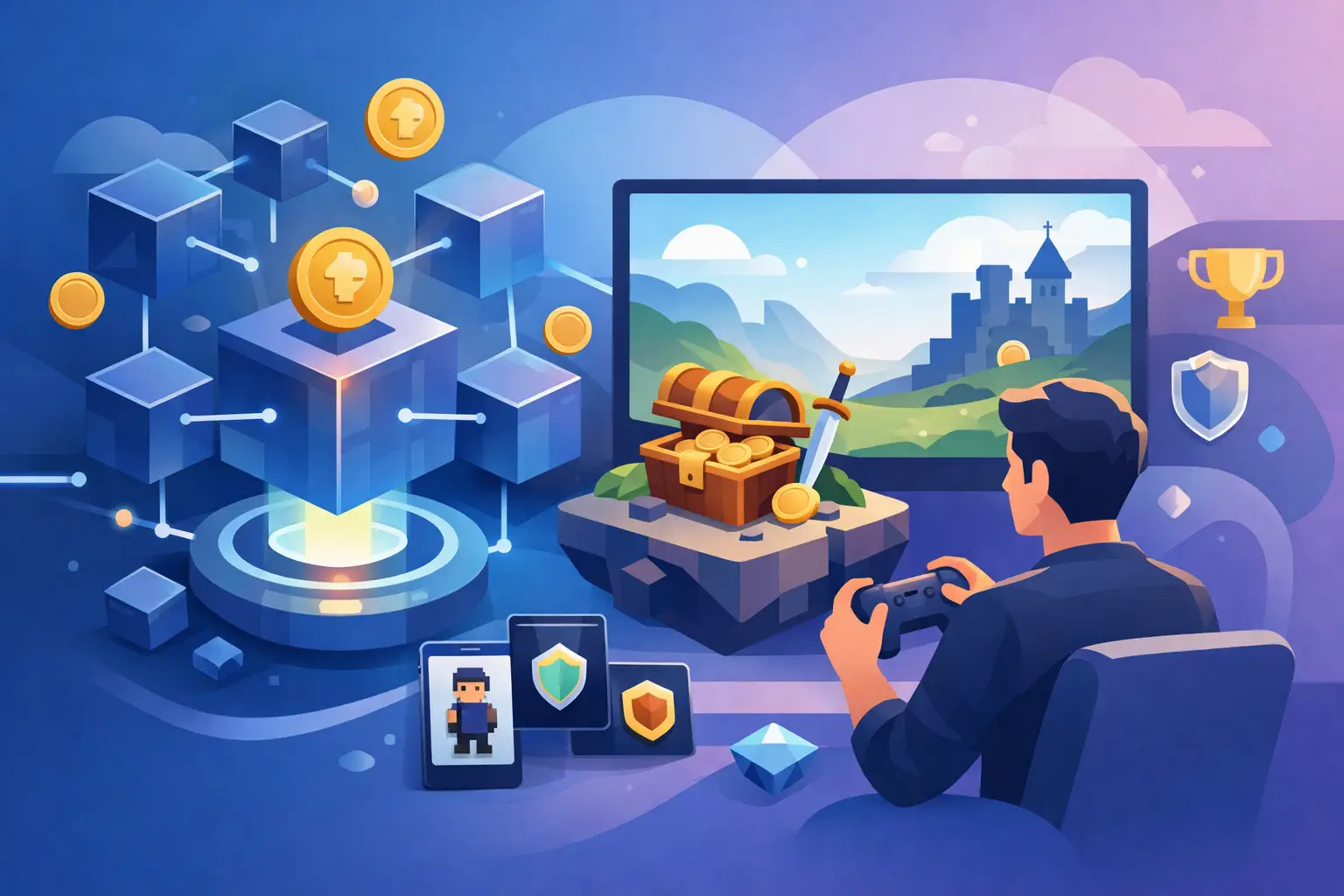
What Is Blockchain Gaming, Really?
If you have ever looked at a crypto casino, a play-to-earn title, or an NFT game and thought, what is blockchain gaming, the short answer is this: it is gaming built around blockchain tech for ownership, payments, records, or fairness. That can mean anything from using crypto to fund your account to holding in-game items in your own wallet instead of leaving everything locked inside a publisher’s system.
That sounds slick, but the real story is more practical than the hype. Blockchain gaming is not one thing. It is a mix of ideas – some useful, some overblown, and some only worth caring about if you actually play for money or care about what happens to your items and funds after you log out.
What is blockchain gaming in plain English?
Blockchain gaming is any game that uses blockchain technology as part of how it runs. The blockchain acts like a public digital record. It can track transactions, confirm ownership, and move digital assets between players or platforms without relying on a single company to hold everything in-house.
In a standard online game, your coins, skins, cards, or account balance live on the game company’s servers. If that company changes the rules, shuts down a title, or limits withdrawals, you usually have no say. In blockchain gaming, some of those assets can be stored in your personal crypto wallet, which gives you more control on paper.
That does not automatically make the experience better. Some players want full ownership. Others just want fast deposits, quick cashouts, and no nonsense. For them, blockchain matters less as a buzzword and more as a tool that can make payments and verification faster.
The core pieces that make blockchain gaming work
Most blockchain games rely on a few moving parts. The first is the blockchain itself, which records transactions. The second is a crypto wallet, which stores your tokens or connects you to the game. The third is some type of digital asset, often a token or NFT, that represents currency, items, characters, land, or account value.
Smart contracts are another big piece. These are bits of code that automatically execute rules once conditions are met. In gaming, that can mean handling trades, distributing rewards, processing stakes, or verifying outcomes without a middleman stepping in every time.
For casino-style gaming, blockchain can also support transparent payment flows and, in some cases, provably fair systems. That matters to players who are tired of slow withdrawals, vague terms, and games that feel like a black box.
Ownership is the biggest selling point
The biggest claim behind blockchain gaming is simple: you own your stuff. If you win a token, buy an in-game asset, or earn a collectible tied to the blockchain, that asset may sit in your wallet rather than only inside a game account.
That creates real appeal. You are not just renting progress inside somebody else’s ecosystem. In theory, you can sell the asset, trade it, or move it elsewhere if the game supports it. For players used to spending real money on digital items with no resale option, that is a major shift.
Still, ownership comes with strings attached. An NFT in your wallet is only as valuable as the market for it and the game’s continued support. If player interest dries up, ownership does not save the price. You may own it, but that does not mean anyone wants to buy it.
Payments are where blockchain gaming gets real
For a lot of adult players, especially in casino environments, the more immediate benefit is payment speed. Blockchain gaming often uses cryptocurrency for deposits, withdrawals, and transfers. That can cut out some of the delays tied to banks, card processors, and old-school payment rails.
This is where the tech stops sounding theoretical. If you have ever waited days for a payout, sent documents back and forth, or dealt with payment blocks, crypto-based gaming can feel like a breath of fresh air. Faster transactions, fewer hoops, and round-the-clock access are a big part of why blockchain gaming keeps gaining ground.
That said, fast does not always mean free or easy. Network fees can spike. Some coins move faster than others. And if you send funds to the wrong wallet address, there is usually no customer support button that can magically reverse it. No fine print sounds great until you realize self-custody means more responsibility too.
NFTs, tokens, and in-game economies
A lot of people hear blockchain gaming and immediately think NFTs. That is understandable, but NFTs are only one part of the picture. In games, NFTs are often used to represent unique items such as characters, weapons, skins, cards, or virtual land.
Tokens are different. They are usually fungible, meaning each one is interchangeable with another. A game might use its token as an in-game currency, a reward mechanism, or part of a bigger economy tied to tournaments, staking, or governance.
This can create a more open market, but it can also create pure chaos. When game economies get too focused on speculation, players stop acting like players and start acting like traders. That is great if you enjoy chasing price swings. It is less great if you just want solid gameplay and fair value.
What is blockchain gaming for casino players?
For casino players, blockchain gaming is less about fantasy land plots and more about trust, speed, and control. It usually means playing with crypto, moving funds faster, and sometimes getting access to transparent systems that show how results are generated or verified.
That does not mean every blockchain casino works the same way. Some use crypto only for payments. Others integrate smart contracts more deeply. Some push provably fair models. Others still run on traditional gaming engines but wrap the experience in crypto convenience.
The smart move is to look past the label. If a platform says blockchain, ask what that actually changes for you. Are withdrawals quicker? Are fees lower? Is fairness easier to verify? Do you have more control over funds? If the answer is no, the branding may be louder than the benefit.
For players who care about speed and a straight-shooting experience, that distinction matters. A crypto-first casino like Mr. O Casino speaks to that crowd by focusing on fast payouts and less friction, which is often the real-world appeal of blockchain-adjacent gaming.
The upside is real, but so are the risks
Blockchain gaming has legitimate strengths. It can improve transparency, increase control over digital assets, and make payments more flexible. It can also give players alternatives to the slow, overcomplicated systems that have frustrated online gamblers for years.
But let’s keep it honest. The space also has weak projects, inflated promises, and token models that collapse once the hype fades. Some games feel like financial products with a thin layer of gameplay slapped on top. Others are technically decentralized but still confusing, clunky, and packed with fees.
Security is another issue. If your wallet gets compromised, the damage can be immediate. If a smart contract has a flaw, users can get burned. Regulation also varies, especially in real-money gaming, so what is available and how it operates may depend on where you live.
Who should care about blockchain gaming?
If you are the kind of player who wants full control over digital assets, likes using crypto, or hates waiting around for payments, blockchain gaming is worth understanding. If you are into casino play, it can offer real advantages when it comes to funding accounts and accessing winnings faster.
If you do not care about ownership, never touch crypto, and just want a polished game with no setup, then blockchain gaming may not change much for you. In that case, the tech is background noise unless it clearly improves the player experience.
That is the right way to look at it. Not as a revolution just because the word blockchain shows up, but as a tool. When it makes gaming faster, fairer, or more flexible, it matters. When it adds friction, jargon, and price speculation, it is just clutter.
So, what is blockchain gaming really worth?
It is worth your attention when it gives you something concrete: actual ownership, quicker transfers, better transparency, or a more direct path to your money. It is not worth much when it hides a weak product behind crypto buzz.
The sharpest players already know how to separate real value from noise. Treat blockchain gaming the same way you treat any casino offer or gaming platform claim – look at what you get, how fast you get it, and what the catch is. If the tech gives you a fair hand and less hassle, that is where it starts getting interesting.
Leave a Reply