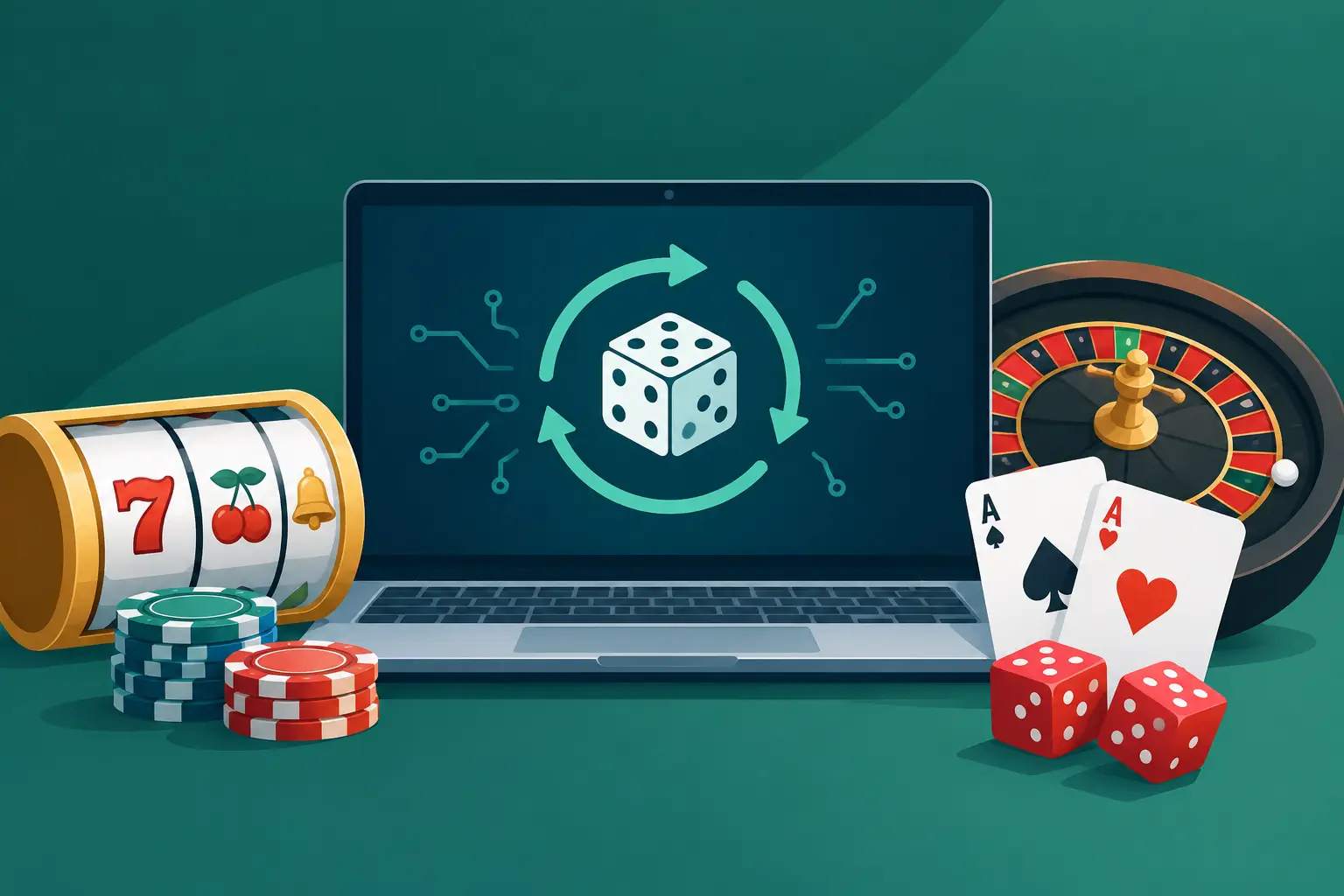
Do Casino Games Use RNG? The Straight Answer
A slot drops a jackpot seconds after you spin. The next spin loses. That can feel suspicious until you understand what is happening behind the screen. So, do casino games use RNG? Yes – legitimate digital casino games use a Random Number Generator, or RNG, to produce outcomes that are meant to be unpredictable from one round to the next.
That does not mean every game has the same odds, every casino runs the same software, or a big win is waiting because a game has been quiet. RNGs create random outcomes. The game rules, paytable, and return-to-player percentage determine what those outcomes can pay.
Do Casino Games Use RNG in Every Round?
For online slots, video poker, virtual table games, scratch-style games, and most digital instant-win titles, an RNG is the engine behind the result. It continuously produces sequences of numbers, even when nobody is pressing a button. When you hit Spin, Deal, or Play, the game uses a number generated at that moment to select the outcome.
On a slot, that number maps to a specific reel position. The animation you see afterward is just the presentation. The reels do not stop because you nearly landed a bonus symbol. The result has already been selected, then the game shows it with lights, sound, and a little casino drama.
In virtual blackjack, roulette, baccarat, and poker-style games, the RNG determines the card order, roulette number, or other required event. Live dealer games work differently because a real dealer handles physical cards or a real roulette wheel. In that case, the live event decides the result, while the online system records and displays it.
What an RNG Actually Does
An RNG is not a tiny casino employee deciding whether you deserve a win. It is software designed to generate values that cannot be practically predicted by a player. Those values are then translated through the game’s math model.
Here is the part players often miss: random does not mean evenly spaced. A random game can pay two bonuses close together, then go a long stretch without another. It can also produce several losses in a row. That does not prove the game has changed its mind or is “due” for a win. Random streaks are built into the experience.
A proper casino game also uses weighted outcomes. On a slot, each symbol does not necessarily have the same chance of appearing. Lower-paying symbols may appear more often than premium symbols, while a jackpot combination appears far less frequently. That weighting is how a game can offer different prize levels while maintaining its designed payout structure.
RNG Does Not Mean Every Game Is Equal
RNG fairness answers one question: is each outcome selected randomly under the game’s programmed rules? It does not answer whether the game is low-risk, high-volatility, generous, or right for your bankroll.
Two RNG slots can feel completely different. One may deliver lots of small returns and occasional bonus rounds. Another may go quiet for longer but have the potential for larger individual payouts. That is volatility, and it matters as much as the headline RTP for players deciding what to play.
Return to player, or RTP, is a theoretical long-term figure expressed as a percentage. A 96% RTP game is designed to return about $96 for every $100 wagered across a massive number of spins, not across your next 10, 100, or even 1,000 spins. Your session can land above or below that figure – sometimes far above, sometimes far below.
The house edge is the other side of the same equation. If a game has a 96% RTP, its theoretical house edge is 4%. RNG makes individual results unpredictable. It does not erase the mathematical edge built into a real-money casino game.
Can a Casino Change an RNG When You Start Winning?
A reputable operation should not be changing an individual player’s RNG results because they are ahead, wagering larger amounts, using crypto, or playing with a bonus. The game outcome should be governed by the game’s established RNG and approved configuration, not by a player-specific switch.
Still, smart players know the difference between a fair game and a fantasy. Fair does not mean guaranteed profit. No RNG system can promise that your next spin will win, and no legitimate casino should sell that story. A hot run can end fast. A cold run can continue longer than you expect.
Crypto does not change this either. It can make deposits and withdrawals faster, but it does not make the game math magically better or worse. The RNG, RTP, volatility, bet size, and game rules are what shape your play.
How to Spot Games Worth Your Time
You do not need to inspect source code to make better choices. Start by checking whether a game clearly displays its rules, paytable, bonus mechanics, and RTP information. A game that hides how payouts work gives you less to judge.
Next, pay attention to the provider and the platform’s reputation. Established game studios build their business on consistent game behavior and technical oversight. Reputable casinos also make their terms clear, especially around promotions, wagering requirements, maximum bets, and withdrawals.
Before you commit a larger balance, try a game at a bet size that makes sense for your session. Watch how the bonus feature works. Read what multipliers, free spins, wilds, scatters, and jackpots actually require. If you cannot explain the game’s key rules after a few minutes, slow down before raising the stakes.
At Mr. O Casino, the better approach is simple: choose games you understand, know the offer terms before using a bonus, and treat fast withdrawals as a convenience, not a reason to chase a result.
The Biggest RNG Myths That Cost Players Money
The first myth is that a slot becomes ready to pay after a long losing streak. It does not. Each spin is an independent RNG event unless the game rules explicitly state a progressive feature or meter that carries over. A slot has no memory of what you lost trying to trigger a bonus.
The second myth is that stopping and restarting a game changes your luck. It may change your mood, but it does not improve the underlying probability. The same goes for changing your bet after a few losses. Betting more does not force a win. It only puts more money at risk per round.
The third myth is that a near miss proves a jackpot was almost yours. On many slots, near-miss visuals are designed to create excitement. They are not evidence that the next spin is closer to a win. The RNG has already selected the result, and the visual layout is part of the game design.
Finally, do not confuse a bonus with an advantage unless you have read its terms. Free spins, cashback, and match offers can add value, but wagering requirements, eligible games, contribution rates, and bet caps affect how that value plays out. The strongest move is knowing the rules before you play, not arguing with them after a win is on the line.
A Better Way to Play RNG Casino Games
Set your budget before you open a game and decide what a good session looks like. Maybe you are playing for entertainment, testing a new slot, or using a promotion you have already reviewed. Whatever the goal, separate the money you are willing to wager from funds you need elsewhere.
Then choose games based on facts, not streaks: RTP, volatility, feature mechanics, and your preferred bet range. Keep bets at a level that gives you room to experience the game instead of burning through your balance in a few spins. If the session stops being fun or the losses exceed your limit, cash out what remains or walk away.
RNG is the reason no one can honestly call the next result. Use that fact to your advantage: ignore superstition, read the game rules, and make every wager one you are comfortable making whether the next spin hits or misses.
Leave a Reply