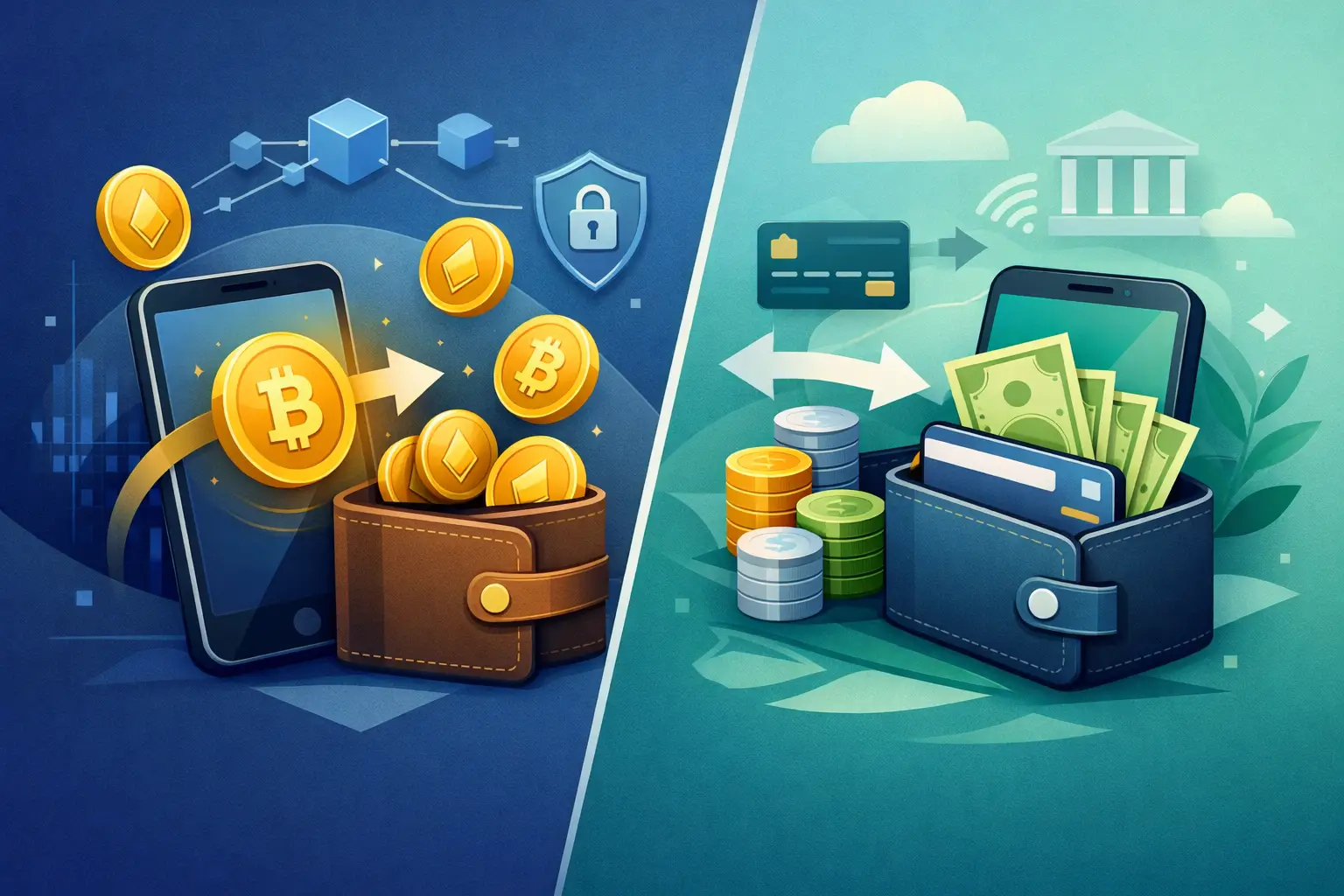
Crypto Withdrawals Versus eWallet Payouts
That winning session feels a lot different when your cash-out method turns into a waiting game. With crypto withdrawals versus ewallet payouts, the right choice comes down to what you value most: direct control of your funds, familiar payment tools, lower friction, or a payout route that fits how you already move money.
Neither option wins every time. Crypto can put you in the driver’s seat, while eWallets can feel more familiar if you prefer a payment account over a blockchain wallet. Here’s the straight-shooting breakdown before you hit withdraw.
Crypto Withdrawals Versus eWallet Payouts: The Real Difference
A crypto withdrawal sends digital currency from the casino to the wallet address you provide. Depending on the coin and network, the transaction is confirmed on a public blockchain. Once it is sent and confirmed, the funds are generally under your control – no bank account required to receive them and no payment app sitting in the middle.
An eWallet payout sends funds to a third-party digital payment account. The eWallet provider handles the account, transaction review, and any later transfer to your bank or card. It can be a comfortable option for players who already use an eWallet for everyday online payments, but it adds another platform and another set of rules to the cash-out process.
That distinction matters. Crypto is built around wallet ownership and network settlement. eWallets are built around account access and payment-provider approval. If you hate extra checkpoints between a win and your usable balance, you will want to understand exactly where those checkpoints sit.
Speed: Network Time vs. Provider Time
Crypto has earned its reputation with casino players for a reason. Once a withdrawal is approved on the casino side, it can be broadcast quickly, and many networks confirm transactions in minutes. The actual timing depends on the currency, the network’s traffic, the fee setting, and the casino’s internal review process.
That last part is where players need to keep it real. No payment method can erase a pending withdrawal review, account verification request, bonus-term check, or security hold. Fast payouts start with a clean account, correct wallet details, and a withdrawal that meets the casino’s stated conditions.
With an eWallet, the casino may approve the payment promptly, but the provider can still add processing time. Your funds may appear in your eWallet quickly, or they may be reviewed, held, or limited based on the provider’s policies. Moving that balance from the eWallet to your bank can create one more delay.
For players who want to receive crypto and keep playing, hold it, or move it on their own schedule, crypto usually has the edge. For players who want their winnings to land in a payment account they already use, an eWallet may feel easier even if it involves an extra step.
Fees Can Change the Winner
A payout is not only about how fast it arrives. It is about how much of it survives the trip.
Crypto transactions can involve network fees. These fees rise and fall with blockchain demand, and they can look very different depending on the asset and network you use. A low-fee network may be ideal for a modest cash-out, while a congested network can make a small withdrawal feel less attractive. If you later convert crypto to dollars through an exchange, that conversion may bring additional trading or withdrawal fees.
eWallet payouts can carry their own charges, including receiving fees, currency conversion costs, account fees, or transfer-to-bank charges. Some providers make fees easy to miss because they appear after the payout reaches the wallet. Others may offer a no-fee incoming payment but charge for getting the money to your bank.
The smart move is simple: check the full route, not just the first transfer. A payout that looks free at the casino can still cost money when you convert, transfer, or withdraw it elsewhere.
Control and Privacy: What Matters to You?
Crypto gives you more direct custody when you use a wallet you control. You choose where the funds go, and you do not need to route them through a traditional payment provider just to receive them. Blockchain transactions are public, but your personal identity is not automatically displayed on-chain. That is not the same as being invisible, especially if your wallet connects to a regulated exchange or other verified service.
eWallets offer convenience, but they are account-based. The provider can ask for identity documents, set transaction limits, review activity, or restrict access under its terms. That does not make eWallets a bad choice. It just means the provider remains part of your payout relationship.
For a player who values self-custody and wants fewer financial middlemen, crypto is tough to beat. For someone who wants a familiar account dashboard, customer support from a payment company, and a clear path to a linked bank account, an eWallet may be the better fit.
The Biggest Risk Is Usually User Error
Crypto puts more control in your hands, which also means more responsibility. Send funds to the wrong wallet address, choose an unsupported network, or lose access to your wallet recovery phrase, and there may be no easy reversal. Blockchain payments are designed to be final.
Before requesting a crypto withdrawal, confirm the receiving address character by character, use the exact supported network, and make sure the wallet can accept that asset. For a first-time transaction, a smaller test transfer can be a sensible way to confirm everything works as expected.
With eWallets, the mistakes tend to look different. You may use an account registered under a different name, exceed a provider limit, overlook an identity check, or discover that your country or bank is not supported for a specific transfer type. The funds are less likely to vanish because of one wrong character, but an account problem can still slow the process down.
When Crypto Is the Better Cash-Out Play
Crypto may be your best move if you want direct access to your funds, already understand wallets and networks, or prefer to avoid waiting on a bank transfer after receiving a payout. It also makes sense when you use crypto regularly and do not need to immediately convert every win to dollars.
At a crypto-first casino like Mr. O Casino, this route can align with what many players actually want: a simple path from approved withdrawal to a wallet they control. No pretending that every transaction is identical, no magic promises. Just make sure your account is verified where required, your bonus requirements are met, and your wallet information is right before you submit.
Crypto is less appealing if price volatility stresses you out. The value of a coin can change between the moment you receive it and the moment you convert it. Stablecoins can reduce that price movement, but you still need to understand the token, the network, and the exchange or wallet you plan to use.
When an eWallet Makes More Sense
An eWallet can be the practical call when you do not want to manage private keys, wallet backups, network selection, or crypto conversions. If your eWallet is already verified, funded, and connected to your bank, it may give you a familiar way to receive and spend your payout.
It can also be a better choice for players who want customer-service recourse through a payment provider. That added layer may come with checks and limits, but some people prefer it. Convenience is not just about speed – it is also about using a system you understand.
The trade-off is that you are trusting another company to process and hold the balance. Review its payout rules before you play, especially its fees, withdrawal limits, verification standards, and bank-transfer timing.
Make the Choice Before You Win
Do not wait until you are staring at a cash-out screen after a hot slot run. Set up your preferred payout method first. Verify your eWallet if you plan to use one. If you choose crypto, secure your wallet, save your recovery phrase offline, and learn which network you will use.
Then play within a budget you can afford to lose, treat bonuses as offers with terms rather than free money, and keep your withdrawal details consistent. The best payout method is the one you can use confidently when it is time to collect.
Leave a Reply